

When to Use Traditional Puzzles and When to Play Online on PuzzleFree.Game
There’s something timeless about a good puzzle. The sound of pieces clicking together, the calm focus, and the quiet satisfaction of seeing the picture form. Yet, in the digital age, puzzles have evolved beyond cardboard — they’ve moved to screens, becoming more flexible and accessible than ever.
PuzzleFree.Game represents this modern shift, offering AI-generated puzzles and instant play from any device. But does that mean traditional puzzles have lost their charm? Not at all. Each version — physical and digital — has its perfect time and purpose.
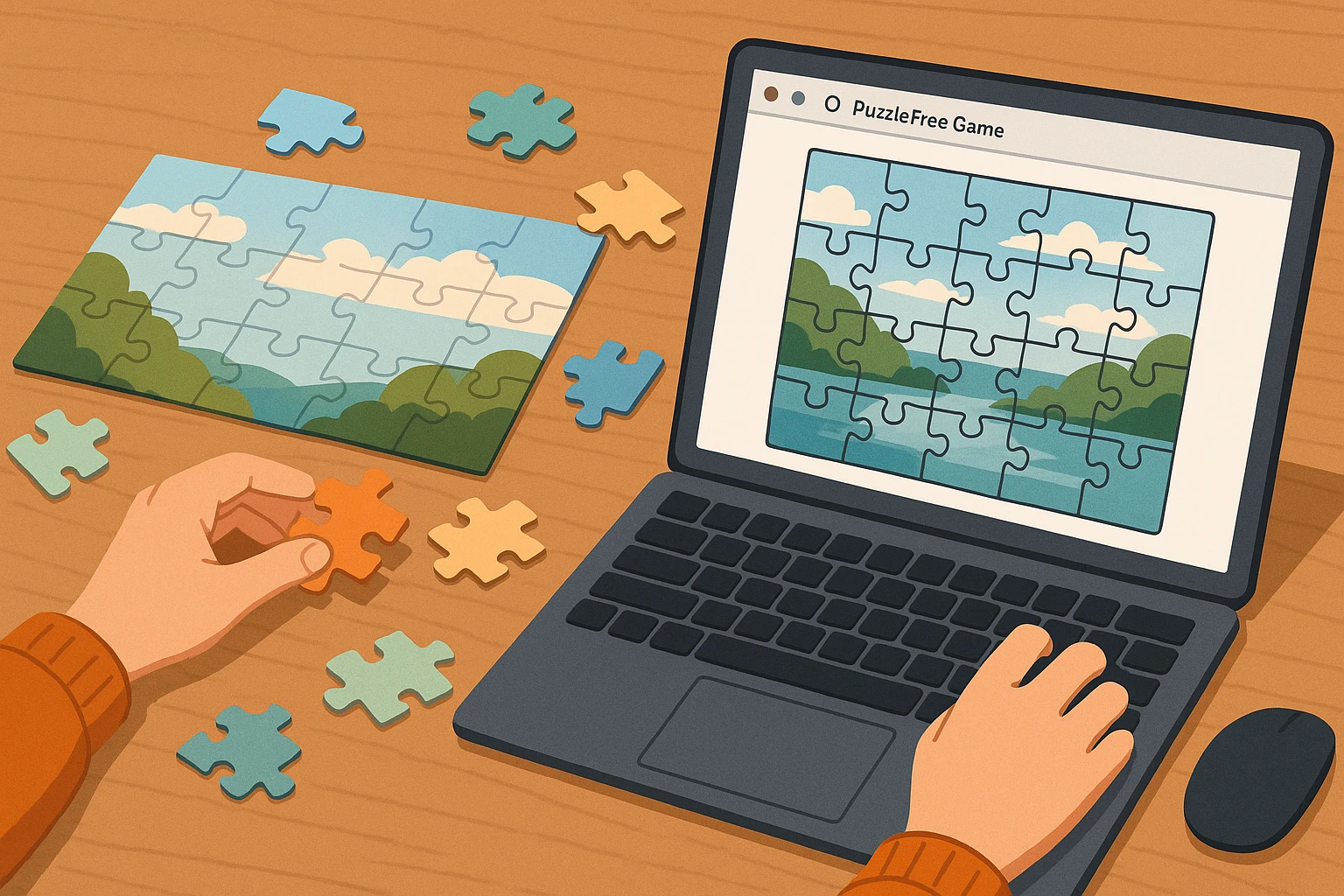
The Charm of Traditional Puzzles
Nothing replaces the tactile experience of holding real puzzle pieces. For many people, it’s almost meditative — the slow pace, the texture, the quiet atmosphere of a Sunday afternoon surrounded by colors and shapes. Traditional puzzles are ideal when you want to unplug completely, disconnect from screens, and focus only on the physical world.
They also make a wonderful group activity. Families often gather around a table, chatting while working on the same picture. There’s a shared sense of progress — a physical reminder that patience pays off. The act of placing the final piece is oddly satisfying, like closing a small life chapter.
Traditional puzzles are best when:
- You want a screen-free and mindful hobby.
- You enjoy long, quiet sessions without digital distractions.
- You want to share a tactile, social experience with others.
However, their biggest drawback is practicality. They require space, time, and good light. Losing even one piece can be frustrating, and it’s not something you can just pause and resume anywhere.
The Convenience of Online Puzzles
That’s where online puzzles come in. Platforms like PuzzleFree.Game combine the same satisfaction with flexibility and ease. You can play from your laptop, phone, or tablet — no cleanup, no missing pieces, no storage issues.
Online puzzles are perfect for short breaks or mental resets. During work, travel, or before bed, you can open a quick 100-piece puzzle, save your progress automatically, and come back later. The site even lets you upload your own photo or generate an AI image, turning a personal moment into an interactive puzzle.
Online puzzles are best when:
- You want a fast, relaxing escape during the day.
- You travel often and want a portable hobby.
- You enjoy experimenting with AI-generated art or personal images.
- You prefer to track your progress automatically without clutter.
When Each Type Wins
If puzzles are about relaxation, then physical ones win for deep, mindful immersion — a slow and deliberate ritual. Digital puzzles, on the other hand, win for accessibility and creativity. They adapt to your lifestyle rather than demanding your space or time.
Many puzzle lovers now combine both worlds. They keep a traditional puzzle at home for weekends and use online platforms like PuzzleFree.Game during the week for short sessions. The result is the best of both — the warmth of tradition and the freedom of technology.
The Balance Between Old and New
Ultimately, puzzles are not about where you play, but how you feel while doing it. Whether it’s cardboard pieces under warm light or digital tiles on a glowing screen, both serve the same purpose: focus, calm, and a quiet sense of progress.
Traditional puzzles remind us to slow down. Online ones remind us that joy can be portable. And when life gets too noisy, all it takes is one simple click — or one missing piece — to bring everything back into balance.